
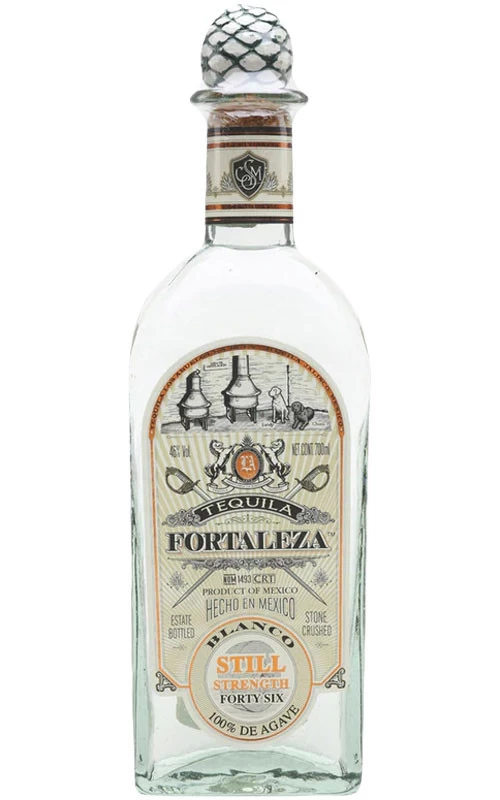
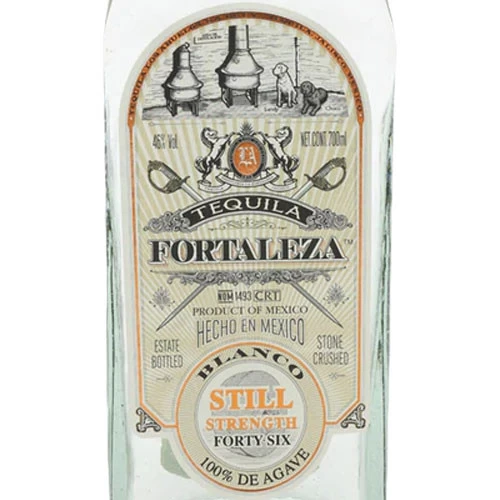

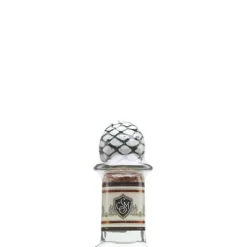
Fortaleza Still Strength Blanco Tequila
Original price was: $247.99.$95.99Current price is: $95.99.
Proof92 (46% ABV)
*Please note that the ABV of this bottle may vary
- Protecting Your Payment Information
- High quality products, hassle-free returns.
- Quality products for every lifestyle.
- Buy Quality, Live Better

About Fortaleza Still Strength Blanco Tequila
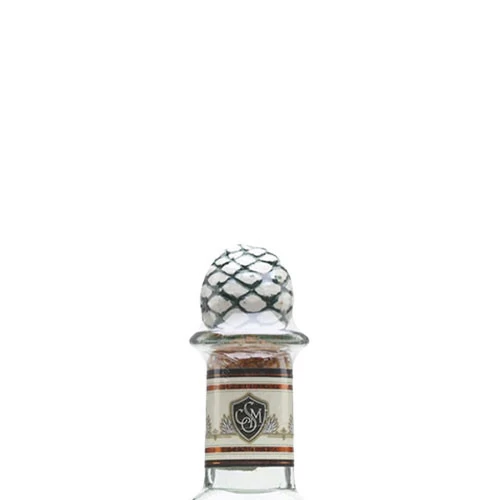
Tequila Fortaleza is crafted using traditional methods, just as it was made 150 years ago. The process starts with mature, 8-year-old blue Weber agaves from the Tequila valley. After being harvested, the agaves piñas (hearts) are slowly cooked in a stone oven for 36 hours, turning the starches into sugars. Next, they are crushed using a traditional tahona (stone mill). Then, the juice is left to ferment in open-air wood tanks for about 4 days with the help of special yeast that has been in the family for generations. Finally, the juice is double-distilled in traditional copper-pot stills. The tequila leaves the still at 92 proof, and that’s the proof at which Fortaleza Still Strength Blanco Tequila is bottled. It comes in a hand-blown bottle made by Mexican artisans and topped with an attractive piña-shaped stopper. Initially only available at the distillery in Tequila, Jalisco, this delicious expression is now available for purchase.
Get your bottle of this still-strength tequila today!
About Tequila Fortaleza
In 1856, Don Cenobio Sauza moved to Jalisco, Mexico and began importing tequila from Mexico into the United States. Upon his death in 1877, his son, Don Eladio Sauza, took control of the family business and began distilling tequila himself. For nearly a century, the Sauza family continued distilling tequila from their estate situated in the foothills of Volcán de Tequila in Jalisco, Mexico. The distillery eventually closed its doors in 1968 but only for a brief period of time. In 1999, Don Guillermo Sauza — a fifth-generation master distiller — resurrected the family business and opened the doors to Destileria La Fortaleza.
Fortaleza Tequila is made using 100% blue weber agave grown in the rich, volcanic soil of the Tequila Valley. The agave, which are nourished by the summer rains and protected from harsh winter winds, are grown for seven to eight years before being harvested at their peak of maturity by expert jimadors (a jimadors is a type of Mexican farmer who specifically harvests agave). After the agave have been harvested, their hearts, or piñas, are roasted for 33 hours in a brick oven with meter-thick walls. Then, the soft, sweet piñas are crushed using a tahona (a giant stone wheel), the exact same method that Sauza’s great-great grandfather used a century ago. After the piñas are crushed, the agave pulp, or mosto, is extracted and naturally fermented over the course of five days in open-air wood tanks before being double-distilled in copper-pot stills.
About Tequila
Although tequila has developed a bad reputation, there’s more to the spirit than just shots on a Saturday night.
This traditional Mexican drink origins in the state of Jalisco when according to a local legend, lightning struck an agave cactus before the Nahua tribe drank its warm nectar. Behold, tequila.
Legally, tequila has to be made of 51% of Blue agave around the Jalisco region in Mexico. There are different types of tequila according to age – from the youngest representatives, blanco, reposado, and añejo, to the oldest extra añejo.
Check out our impressive selection of tequilas, find your new favorite in Top 10 tequila & mezcal, or explore our treasury of Rare & hard to find tequilas.
Be the first to review “Fortaleza Still Strength Blanco Tequila”
Related products

Tequila
Tequila
Tequila
Tequila

Tequila
Tequila

Tequila
Reviews
There are no reviews yet.